





Operating systems for private markets and fund services
Halyard redesigns how your firm operates and builds the system that runs it, on the platforms you already use.
Why now
Decoupling growth from headcount.
Fund services run on cognitive work: interpreting documents, reconciling records, investigating breaks and deciding what happens next. Each generation of software, from spreadsheets to workflow tools, made the people doing that work faster, but none could do the work itself. Capacity has been bought one hire at a time, and headcount has risen with every mandate won.
That constraint is now lifting. Current models can do it: read the notice, reconcile it to the record, investigate the break and prepare the next action, to a standard that can be measured and controlled. Once the work runs on systems, each new mandate draws on capacity already built instead of new hires. Halyard rebuilds fund operations on that premise and keeps people where their judgment changes the result.
- LocationsNassau, New York and Toronto
- IndustriesPrivate markets and fund services
- ServicesOperating models and their systems
Industries


Corporate services
Corporate administration, statutory records and entity changes.
Corporate-services providers
Trust and fiduciary
Periodic reviews, distribution requests and trust administration.
Trust and fiduciary firms
Private credit and private equity
Loan events, portfolio information and manager reporting.
- Private credit operations
- Portfolio information and reporting
- Provider coordination
- Operating performance


Financial-services groups
Common service processes across entities and jurisdictions.
- Common service processes
- Management information
- Implementation across entities
- Group operating economics
Services
We model how your firm delivers its services, redesign the work and build the system that carries it out. Every engagement begins with a defined first phase and extends as measured results justify.
Services overview
The operating model
Every service the firm delivers, mapped with its steps, systems and cost, then redesigned for the system to carry.
More on the operating modelThe operating layer
Shared records, connections and controls across your systems, so no employee has to carry a case between them.
More on the operating layerServices in operation
Each redesigned service carried out end to end, with people deciding where judgment or authority is required.
More on services in operationThe work we are asked about most
Industries- Investor servicingOnboarding, investor-record changes and queries often require information from several sources.
- Reporting and reconciliationReporting work includes obtaining the right records, resolving differences and establishing that the figures and commentary describe the same period and fund.
- Entity changesA director change may involve an instruction, supporting records, resolutions, approvals and a filing.
- Periodic reviewsThe system brings together relevant deeds, correspondence, previous decisions and outstanding actions.
- Requests and administrationA distribution request can require supporting information, an understanding of earlier decisions and preparation for the appropriate review.
- Private credit operationsLoan notices, borrower reporting and amendments need to be matched to the correct facility and existing terms.
- Client-review preparationThe brief brings together relevant changes, open actions and discrepancies across the firm's approved records.
- Common service processesShared identifiers, work status and evidence allow a process to continue across teams without each one reconstructing the context.
Delivery
The engagement establishes the current operating economics, tests a different process and introduces it into use.
- 1Baseline
Establish the cost and performance of the existing process, including review, exceptions and coordination.
- 2Design
Define the outcome, available information and tools, permitted actions and acceptance criteria.
- 3Pilot
Compare complete work with the existing process, including difficult cases and the effort required to verify the result.
- 4Implementation and rollout
Introduce the system into live operations and extend its scope where performance supports it.
- 5Handover and development
Establish operational ownership, then evaluate changes in the process and underlying models against the work the firm needs to perform.
Reporting example
This invented service-reporting example shows how source selection, calculation and review fit together.

How we work
Expected output
“Open service requests increased from 100 to 110, a rise of 10 requests or 10%, using the approved month-end records R1 and R2. Current-month commentary is missing. The reason for the increase has not been established.”
Reporting exampleTest cases
- State the movement; leave its cause unresolved.
- Use the approved version and record the exclusion.
- Show the absolute change; percentage change is undefined.
Our view
Halyard's view on operating economics, implementation and the changing capabilities of AI in financial services.

The economics of fund servicing
AI changes the human effort a business needs to produce an additional unit of service. In fund services, the opportunity is to weaken the relationship between more mandates, greater complexity and the number of people required to deliver the work.
Read the article
Individual productivity and operating capacity
An employee with a capable AI assistant may complete substantially more work. The firm still needs to establish how that work becomes part of a dependable operating process, rather than a collection of individual methods.
Read the article
Model progress and implementation design
An implementation can meet its original specification while leaving useful model capability unavailable to the business. The design has to preserve the firm's operating requirements without permanently preserving the limitations of the model used to build it.
Read the article
The team
Max Bates, Lukas Zarkadas, Simon Henderson and Callum Frodsham lead Halyard's work across the business, implementation and engineering. Senior advisors Ludovic Chechin-Laurans and Andrew Raenden contribute financial-services experience.
-

Max Bates
Co-founder & Managing Director
Max leads the firm and its commercial relationships.
Full bio -

Lukas Zarkadas
Co-founder & Managing Director
Lukas leads business-process design and implementation.
Full bio -
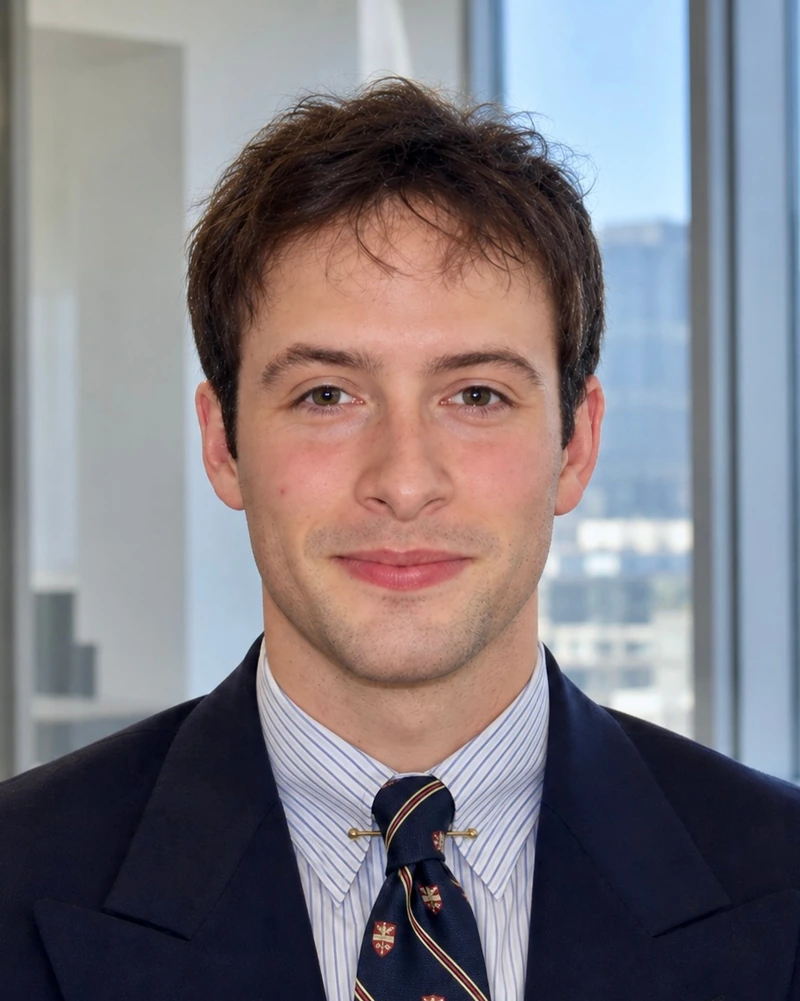
Simon Henderson
Co-founder & Managing Director
Simon leads engineering and technology.
Full bio -

Callum Frodsham
Lead Engineer, AI & Data Systems
Callum is Halyard’s lead engineer for AI and data systems.
Full bio
Senior advisors
Our senior advisors contribute financial-services perspective. Their advisory role is separate from the team’s delivery responsibilities.
-

Ludovic Chechin-Laurans
Senior advisor
Co-founder and director of Capital Union Bank. Previously its CEO and managing director in Nassau from 2013 to 2021.
Full bio -

Andrew Raenden
Senior advisor
Fund-management and banking experience, including previous leadership roles at EFG Bank & Trust Bahamas and RBC.
Full bio

Contact
Every programme begins by modelling how your operation runs today.
Tell us how your operation is organised, which systems it runs on and which services place the greatest demand on your team.